Penetration testing is not a flat-fee service, but a complex process that can range widely in cost. Depending on the scope, complexity, and systems involved, prices can start at just a few hundred dollars and rise well above $100,000.
But the real question isn’t how much pen testing costs. It’s what it could save you.
Many businesses across the U.S. have faced serious cyberattacks, and the damage isn’t just financial. Penetration testing can be a critical part of protecting your company’s future and help you avoid damages worth billions.
In this article, we’ll walk you through what penetration testing typically costs, what affects the price, and how to choose the right option for business’s cybersecurity.
How Much Does Penetration Testing Cost in the United States
For more simple assessments in the US, recent estimates place the average cost of pen testing somewhere between $18,000 and $18,500. But the prices significantly vary based on what type of pen testing you need for your company.
Here’s a comprehensive table to help you understand the pricing better:
| Type of Pen Test | Estimated Cost Range (USD) | What It Covers |
| Cloud Penetration Testing | $10,000 – $45,000 | Cloud infrastructure, configurations, access controls, and storage security in environments like AWS, Azure, or GCP. |
| Mobile Application Pen Testing | $7,000 – $35,000 | Mobile apps on iOS and Android for vulnerabilities in APIs, authentication, data storage, and user input handling. |
| Network Pen Testing (Internal & External) | $5,000 – $40,000+ | Internal and external network systems, including firewalls, servers, and user access points. |
| Social Engineering / Phishing Tests | $4,000 – $10,000 | Simulates human-targeted attacks like phishing emails or phone calls to evaluate employee awareness and response. |
| Web Application Pen Testing | $5,000 – $30,000 | Tests web apps for flaws like SQL injection, XSS, session management issues, and insecure authentication methods. |
Factors That Influence the Penetration Testing Pricing in the U.S.
Pen testing never comes with a standard price for every business. It’s a layered process, and fees vary mostly depending on the scope and complexity of your company’s cybersecurity needs.
Below, we’ll walk you through a few factors which influence the price of pen testing in the U.S. to help you understand the process better.
Scope and Number of IPs
One of the main factors that determines the price of a pen test in the US is scope. Every additional IP, service, or endpoint introduces more potential attack surface for the team to explore, increasing the hours required and, naturally, the overall cost.
- A penetration test that covers just a handful of public IP addresses or a single web application can take days.
- An engagement that includes hundreds of IPs, internal networks, and cloud assets demands weeks of work.
The Type of the Pen Test
Penetration testing has many branches, each with its own focus and purpose. To only name a few types, there are:
- External and internal network tests
- Web and mobile application tests
- API evaluations
This diversity means that some tests require specialized tools and human expertise that may cost more, which is why cybersecurity providers price them differently.
Penetration Tester’s Experience and Certifications
In many businesses, the more experienced a provider is, the higher the price for their services.
A mid‑level consultant will charge a different rate than a seasoned penetration tester with decades of experience. There are certain credentials such as OSCP (Offensive Security Certified Professional) or CREST that vouch for an engineer’s skills, which may add to the cost of a test.
However, greater skills mean better results in spotting weaknesses that, if left unfixed, may bring serious damages later.
The Type of Methodology Used
Testing methodology directly influences the effort, because it affects the time and creativity invested by the engineers. The main methodologies are:
- Black box testing, where testers start with minimal information, mimics a real‑world attacker’s perspective but requires extensive reconnaissance.
- White box testing, with full access to system details, can be more efficient but dives deeper into internal mechanics, taking more time.
- Grey box testing blends both approaches.
Compliance and Industry Standards
This is an important thing to consider, because pen testing is not just useful for good cybersecurity practices, it is mandatory for businesses in many industries.
In the U.S., there are several standards which require formal pen testing as proof of regulatory compliance and to avoid fines, such as:
- Various federal or state requirements
These regulatory requirements often demand more thorough, detailed reporting, which drives up costs because testers need to ensure their work meets specific compliance standards.
Reporting
Another factor which can influence the price of pen testing in the U.S. is reporting.
Not all providers deliver the same reviews. Sometimes, a simple list of findings is enough for internal use, but many firms need detailed, well-structured reports that include:
- Executive summaries
- Risk rankings
- Remediation guidance
Creating a higher-quality documentation that serves both technical and business audiences will take time and expertise. This additional investment can boost the final price of the pen test.
Retesting and Remediation Support
When it comes to good cybersecurity practices, penetration test is only the beginning.
Once vulnerabilities are identified and addressed, business often require a retest to validate fixes. Some vendors include one round of retesting in their offerings, while others charge extra.
On top of that, some cybersecurity providers seek active remediation support, such as collaborative sessions where testers help interpret results or give advice on complex fixes. These added services extend the time it takes to complete a test and increase the total cost.
Advanced Technology for Pen Testing
Artificial intelligence has been integrated in most digital services nowadays. In cybersecurity, AI brings speed, efficiency, and accuracy that go far beyond what people can provide. Pen testing tools have been developed to dig just a little deeper into your systems to spot vulnerabilities that the naked human eye often miss.
Many companies use AI-powered pen testing software to enhance the process, especially when it comes to delivering speedy reports written in plain English. Its purpose is to help the client understand their business’s security posture better, much like a real, human engineer would.
Pen Testing Pricing Models Practiced in the USA
In the U.S., cybersecurity providers offer various means of paying for their services. Sometimes, they combine hourly fees with packages, based on what type of services they offer and what a client needs.
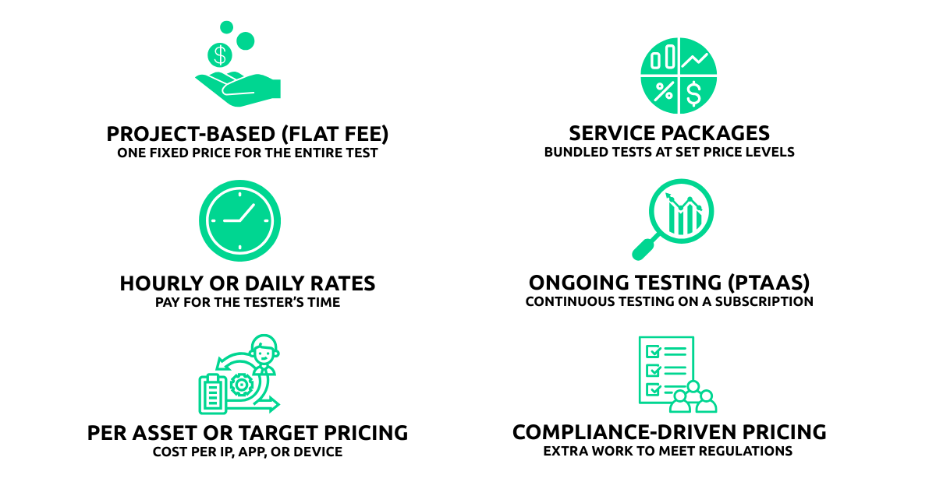
Here are some of the most common pricing models:
- Project-Based (Flat Fee). This is a straightforward option if you know exactly what you need. Together with the cybersecurity team, you will agree on what will be tested (which systems, how deep they’ll go, and the type of testing involved). Once that’s all mapped out, they’ll give you a fixed price for the entire project.
- Hourly or Daily Rates. Some providers charge by the hour or day, especially if the scope of work isn’t clear from the start. This model is useful when you need flexibility or your environment is changing a lot.
- Per Asset or Target Pricing. In this case, pricing is based on the number and type of items being tested (how many IP addresses, websites, or devices are in scope). It’s a good way to predict costs as your environment grows.
- Service Packages (Tiered or Bundled). Some companies offer packages at set prices, which bundle together a mix of services (e.g. testing both your internal and external networks, web apps, and providing reports).
- Ongoing Testing (Retainers or PTaaS). When it comes to ongoing testing, you subscribe (monthly, quarterly, or yearly) and get continuous assessments, access to results via an online portal, and regular updates. This model is great for environments that change fast or teams that want more visibility all year round.
- Compliance-Driven Pricing. In industries with strict regulations, such as finance, healthcare, or government, pen testing often needs to meet specific compliance standards (PCI DSS or SOC 2). These requirements don’t change how tests are charged directly, but they do influence the scope and complexity, which usually means a higher price.
Affordable vs Premium Pen Testing
When it comes to penetration testing, many businesses find themselves weighing the fees they must pay and the services they’ll get.
At first glance, the cheaper option can seem like a smart move for individuals who don’t want to spend too much on cybersecurity. But the downside is that these lower-cost tests rely heavily on automated tools with little to no expert human review.
On the other hand, premium penetration testing takes a much deeper approach. These processes are led by skilled professionals who don’t just run tools. They think creatively, like real attackers would, and dig into systems to uncover risks that aren’t immediately obvious. While they do cost more, they bring significant value, such as hands-on analysis, time, and proven methodologies.
Below, we have a comprehensive table comparing the two:
| Affordable Penetration Testing | Premium Penetration Testing | |
| Tools Used | Mostly automated scanners (e.g., Nessus, OpenVAS) | Mix of automated tools and manual testing by skilled ethical hackers |
| Scope of Testing | Narrow and predefined | Broad, flexible, and tailored to the client’s specific environment |
| Depth of Analysis | Surface-level vulnerabilities | Deep testing, including logic flaws, chained exploits, and complex scenarios |
| Reporting | Basic PDF reports with generic findings | Detailed, personalized reports with context, impact analysis, and visuals |
| Regulatory Compliance | May not meet strict standards | Designed to support compliance and audit-ready documentation |
| Value for Risk Reduction | Limited, often misses critical threats | High, identifies complex, high-impact vulnerabilities |
| Ideal For | Small businesses needing basic checks or meeting a minimum requirement | Mid-to-large organizations, or those in high-risk industries |
Tips on Maximizing the ROI From Your Penetration Testing Service
Just like padlocks on physical doors, cybersecurity is an important part of keeping your business afloat and secure in the digital landscape. If practiced regularly, pen testing can help your business avoid costly penalties and serious data breaches.
Here’s a few tips on how to make the best of the pen testing services you receive:
- Fix Vulnerabilities Before They Become Problems. Pen testing can help you uncover weaknesses in your systems before they’re found by someone with bad intentions. Fixing these issues now is far cheaper than dealing with a full-blown data breach later.
- Staying on the Right Side of the Law. In many U.S. industries, regular security testing is required by law, and failing to comply can result in fines, legal trouble, or loss of contracts. Pen testing helps your business stay compliant.
- Focus on What Matters Most. You don’t need to test every system at once. It’s smarter to focus on your most important assets, like customer data, payment tools, or internal apps. This targeted approach gives you deeper insights and better value for your investment.
- Help Testers Understand Your Business. To save time and make the process easier, you should be transparent about how your systems work, what’s changed recently, or where you’ve had issues before.
- Test What Really Puts You at Risk. Different industries face different threats. Make sure the team’s efforts reflect the actual risks you’re most likely to face. That way, the findings are more relevant and easier to act on.
- Follow Through on the Results. Ultimately, to see the real value, you need to fix the problems the test uncovers. Assign team members to each issue, set deadlines, and track progress. The real return on investment comes from building stronger defenses, not just identifying the weak spots.
Test Your Cybersecurity Against Real-World Threats with CyberGlobal
Cybersecurity is a necessity for every individual operating in the digital space. Regardless of the industry or scope, every business is at risk, and often, only investing in proper, regular pen testing can save you millions in fines or losses later.
But pen testing doesn’t need to break the bank.
At CyberGlobal, we specialize in advanced cybersecurity services made accessible for businesses of every size and every budget. Our offerings can be customized to fit your company’s particular security needs and can scale as you grow.
We provide an extensive suite of pen testing, from network to mobile and app, cloud and social engineering testing.
But the real strength behind our work isn’t just the technology. It’s our people.
Our engineers are some of the best in the field, holding elite certifications like NIS2 Directive, CREST, NATO Top Secret, and ISO/IEC 27001. These are proof of the dedication, discipline, and deep expertise we bring to every engagement.
With us by your side, you can navigate the digital world with confidence, knowing every vulnerability is addressed, and no weakness is left behind.